
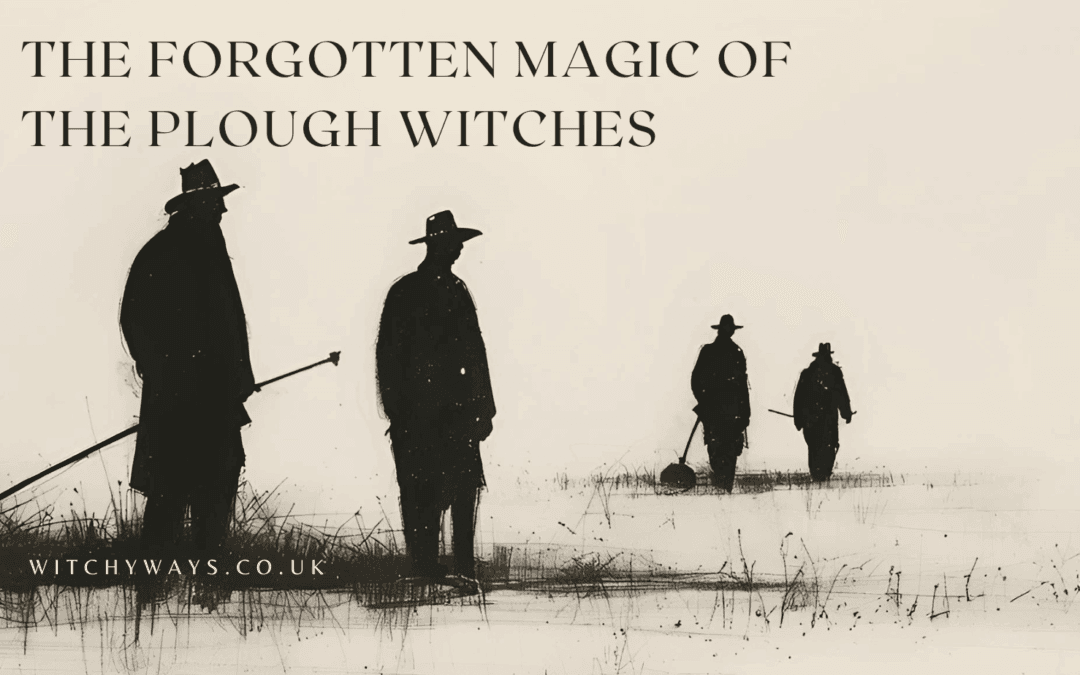
When frost still bites the soil and the sun creeps low across the hedgerows, the old spirits stir beneath the plough. Long before engines and iron, farmhands and labourers walked the furrows singing for luck and life. These were the Ploughmen of the North, the keepers of winter’s first ritual, and though their hands were rough from toil, their work carried something older than they knew.
The Roots of Plough Monday
Each January, when the land still slept, rural communities marked Plough Monday—the ceremonial start of the agricultural year. Groups of young men, often farm labourers, would drag a decorated plough from door to door, collecting coins or ale, singing rhymes, and blessing the soil for fertility.
Some dressed as jesters or animals, others as the “Old Woman” or “Bessy,” a symbolic nod to the earth’s fertile body. Beneath the laughter and ale lay an ancient understanding: the plough broke the skin of the land, and through that wound, life would return.
As historian Ronald Hutton notes, these rites “bound the men of the soil to the turning of the year,” preserving fragments of pre-Christian fertility customs well into modern times.
From Ploughmen to Plough Witches
The term Plough Witch is a modern reimagining. No records describe witches performing these rites, yet the symbolism of plough, furrow, and seed speaks deeply to those who work with earth magic today.
Modern witches have reclaimed the plough as a sacred tool of transformation—a reminder that magic begins where soil meets hand. The Plough Witch honours the same cycle once kept by the ploughmen: death and renewal, darkness and thaw, effort and harvest.
The Tools of the Modern Plough Witch
- The Ploughshare: Symbol of labour and intention, representing the act of turning one’s life toward new growth.
- The Furrow Cord: A braid buried or tied around a plant pot, binding your hopes to the earth’s pulse.
- Offerings of Milk, Honey, and Ale: Gifts for the land and its unseen keepers.
Copper, blood, and ash remain sacred symbols—life, toil, and fire feeding the field’s heart.
A Ritual for the Turning Year
- Blessing the Blade (Imbolc)
At dawn, wash your working tool—spade, trowel, or knife—with milk and ash. Whisper:
“Wake, earth, wake. I turn you in light and life.” - Sowing Charms (Ostara)
Mix your seeds with crushed eggshell and salt. Speak your intentions into the soil as you plant. - Harvest Offering (Lammas)
Gather the first herbs or blooms of summer. Dry them by your altar as a sign of gratitude and return.
The Spirit of the Plough Witch
To be a Plough Witch is not to mimic the old farmhands but to carry their rhythm forward. It is to see your garden, your allotment, even a single pot of herbs, as sacred ground. It is to turn the soil with purpose and trust that the land remembers every kindness.
The old ploughmen broke the earth to bring life. The Plough Witch does the same in spirit, turning intention into growth.
A Charm for the Year’s Turning
Turn the soil and turn the year,
Bless the hands that hold it dear.
Wake the roots, the hidden flame,
Earth remember my given name.
Further Reading and Sources
- E. C. Cawte, Ritual Animal Disguise (Cambridge University Press, 1978)
- Ronald Hutton, The Stations of the Sun (Oxford University Press, 1996)
- Christina Hole, English Traditional Customs (Batsford, 1941)
- T. F. Thiselton-Dyer, British Popular Customs, Present and Past (1876)
- Emma Restall Orr, Living Druidry (Piatkus, 2004)
- Gemma Gary, The Black Toad (Troy Books, 2013)
- Nigel G. Pearson, Treading the Mill (Capall Bann, 2004)